What Are Induced Earthquakes and How Do They Occur?

Induced earthquakes are seismic events created by humans that exhibit similar characteristics to natural earthquakes. These types of earthquakes typically occur when energy accumulated underground is released through artificial means. For example, changes in underground pressure during geothermal energy production or oil and gas extraction processes can trigger induced earthquakes. These processes are generally more controlled and occur for specific purposes compared to natural earthquakes.
The most common mechanism for the formation of induced earthquakes is the hydraulic fracturing (fracking) method. This method uses high-pressure fluids to break underground rocks. Injecting fluids underground causes the rocks to fracture, resulting in the generation of seismic waves. Such events are usually recorded as low-magnitude earthquakes, but they can sometimes lead to larger tremors.
Induced earthquakes can often have negative effects on local communities. This situation can lead to environmental issues as well as safety concerns. In particular, the pressures created on large structures and infrastructures can create risky situations. Therefore, it is important to establish predetermined safety protocols and monitoring systems in areas where induced earthquakes occur. Such measures play a critical role in minimizing potential damage.
In conclusion, induced earthquakes arise as a result of human activities. The effects of these earthquakes are generally different from those of natural earthquakes, yet they remain a serious concern that should not be overlooked. Scientists are conducting research to better understand induced earthquakes and minimize the risks associated with these events. This way, the impacts of future induced earthquakes can be managed more effectively, ensuring public safety.
Why is a Real-Time Earthquake Map Important?

A real-time earthquake map provides the ability to monitor seismic activities worldwide instantly. These maps help users quickly assess events by showing the location, magnitude, depth, and timestamp of earthquakes. For people living in large cities, such a service is crucial for being prepared for emergencies. Real-time data helps users understand which areas are at risk.
Another important feature of the real-time earthquake map is its ability to enhance information sharing and community awareness. The consequences of natural disasters like earthquakes can be significantly mitigated with timely precautions. When people are informed about earthquakes occurring in nearby areas, they can protect their families and communities by keeping them informed. This situation plays a critical role in social solidarity and preparedness.
Additionally, these maps offer scientists and researchers the opportunity to analyze the patterns and trends of earthquakes. Long-term data provides an important resource for understanding seismic activities in specific regions. This information not only aids in the development of earthquake prediction models but also serves as significant guidance in the fields of civil engineering and urban planning.
Finally, the real-time earthquake map allows users to have an intuitive experience. Interactive maps help users visually comprehend the impact areas and intensities of earthquakes. This situation increases awareness at both individual and community levels, making people more sensitive to earthquakes. In short, the real-time earthquake map is a critical tool for both providing information and fostering social awareness.
What is the History of Artificial Earthquake Claims?
Artificial earthquake claims have emerged at various times throughout human history. The Cold War era, in particular, is one of the periods when such claims were most prominently discussed. During this time, it was believed that some countries developed seismic technologies to gain a strategic advantage over their rivals, and that these technologies could potentially create earthquakes. As a result, numerous conspiracy theories and research have been conducted regarding the existence of artificial earthquakes.
The origins of artificial earthquake claims date back to the mid-20th century. During this period, some scientists suggested that underground seismic activities could be triggered by human intervention. For example, seismic movements occurring during the construction of hydroelectric dams have been associated with artificial earthquakes by some researchers. When these types of events were combined with advancements in earthquake engineering and seismology, they led to further speculation about artificial earthquakes.
In the 1990s, with the rise of the internet, artificial earthquake claims began to attract more attention. Social media platforms and forums provided a ground for the rapid spread of these claims. Particularly, beliefs that certain natural disasters were triggered by human activities started to grow. As a result, some researchers and activists began to compile information on this topic in an effort to raise public awareness. However, these efforts often lacked scientific foundations.
Today, the history of artificial earthquake claims continues to be examined from both social and scientific perspectives. Scientists are working to better understand the nature of seismic activities and human impact through research. However, evidence for the existence of artificial earthquakes remains controversial. Such claims are generally rejected within the scientific community. Nevertheless, beliefs about this issue persist among the public, which can lead to misconceptions regarding earthquake safety and preparedness.
How Do Seismologists Evaluate Induced Earthquakes?

Seismologists use various methods and tools to evaluate induced earthquakes. In this process, it is essential to first analyze seismic data to understand the differences between natural and induced earthquakes. Induced earthquakes are typically those that occur due to human activities, such as mining or large construction projects like dams. Scientists conduct detailed studies to determine how impactful these events are and under what conditions they occur.
When evaluating induced earthquakes, factors such as magnitude, depth, and timing of occurrence are of great importance. This data helps scientists understand the effects and risks of induced earthquakes. For instance, the magnitude of an earthquake that occurs during a construction project determines how much the surrounding area will be affected. Therefore, collecting and analyzing such data is critical for both scientific research and public safety.
Additionally, when evaluating induced earthquakes, seismologists also consider natural factors such as geological structures and groundwater levels. These elements can either amplify or mitigate the effects of induced earthquakes. For example, rising water levels can fill underground voids, increasing the risk of earthquakes. Thus, when evaluating induced earthquakes, not only human impact but also environmental conditions must be taken into account.
In conclusion, seismologists adopt a multidimensional approach when evaluating induced earthquakes. This approach encompasses both natural and human-induced factors. The effects of induced earthquakes can be better understood with data obtained from various scientific disciplines. This way, it becomes possible to mitigate risks in future projects and enhance community safety.
What is the Difference Between Artificial and Real Earthquakes?
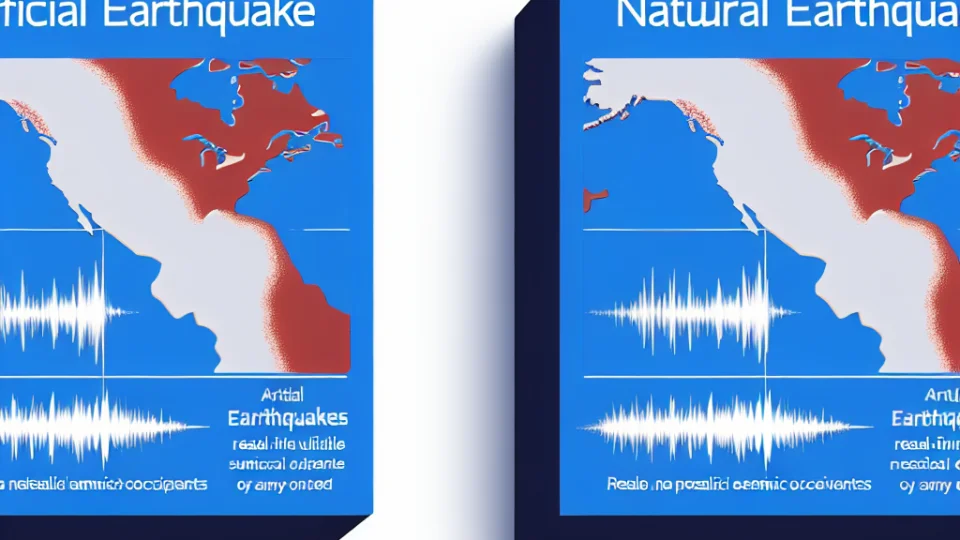
There are distinct differences between artificial earthquakes and real earthquakes. Real earthquakes occur as a result of natural movements in the Earth's crust, while artificial earthquakes are created through human intervention. These two types of earthquakes have significant differences in their formation mechanisms and effects. Real earthquakes result from the movements of fault lines in the Earth's crust, and the magnitude, depth, and location of these movements are a consequence of natural events. On the other hand, artificial earthquakes are typically conducted for seismic research or military purposes.
Real earthquakes are generally measurable and unpredictable events. Their magnitude is determined using methods such as the Richter scale or Moment magnitude. Artificial earthquakes, however, are usually more controlled and predictable in their outcomes because they are created for a specific purpose. For example, when an artificial earthquake is generated, seismologists can work on specific parameters to study the effects of this event. This makes artificial earthquakes a valuable tool for scientific research.
Another important difference between artificial and real earthquakes is the damage and effects they cause. Real earthquakes can often lead to large-scale destruction and loss of life, while artificial earthquakes tend to have more limited effects. However, artificial earthquakes can also create negative impacts on local ecosystems. Particularly in areas where artificial earthquakes are frequently conducted, changes in underground water sources and soil structure can be observed.
In conclusion, the differences between artificial and real earthquakes are significant from both scientific and practical perspectives. Real earthquakes are a result of natural processes, while artificial earthquakes are created through human intervention. Understanding these two types of earthquakes allows for more in-depth research in the field of seismology. Additionally, being aware of these differences enables better preparedness for earthquakes and helps minimize potential damages.
Where Are the Places Most Affected by Induced Earthquakes in the World?

Induced earthquakes are seismic events that typically occur as a result of human activities. These types of earthquakes are often associated with human-related activities such as large construction projects, hydroelectric power plants, and mining operations. One of the regions with the highest incidence of induced earthquakes in the world is the United States. In states like Texas and Oklahoma, changes in groundwater levels during oil and natural gas extraction processes trigger seismic activity. This situation increases the frequency of induced earthquakes and raises concerns among local residents.
Another significant region is China. China is known for its large hydroelectric projects, and during the construction of these projects, changes in groundwater levels lead to induced earthquakes. Particularly in massive projects like the Three Gorges Dam, the rise in water levels has significantly increased seismic activity. The environmental impacts of such projects are not limited to induced earthquakes but can also have negative consequences on ecosystems.
- United States (especially Texas and Oklahoma)
- China (projects like the Three Gorges Dam)
- Sweden (mining activities)
- India (large construction projects)
Sweden is another important region where induced earthquakes occur due to mining activities. Here, changes in underground structures during mineral extraction processes trigger seismic activity. Additionally, in developing countries like India, large construction and engineering projects can also lead to induced earthquakes. Such situations often cause local residents to oppose these activities, making environmental impact assessments increasingly important.
What Are the Scientific Approaches to Artificial Earthquake Claims?

Scientific approaches to artificial earthquakes generally focus on research aimed at understanding the nature and formation mechanisms of these phenomena. Scientists utilize various methods to study artificial earthquakes, and the analysis of seismic data plays a crucial role in this process. Seismologists achieve significant results in determining the differences between artificial and natural earthquakes by employing advanced technology and data collection systems to monitor underground movements. It is being investigated how artificial earthquakes, which are typically generated for a specific purpose, impact seismic activity.
Another scientific approach is the analysis of the effects of artificial earthquakes. These analyses are conducted to assess the impacts of artificial earthquakes on underground structures. For instance, the interactions of seismic blasts conducted during hydrocarbon exploration or the construction of underground storage facilities with surrounding natural seismic activity are being examined. Scientists suggest that such activities may lead to stress accumulation in underground layers, potentially resulting in larger earthquakes.
- 1. Comparison of artificial earthquakes with seismic data
- 2. Analysis of changes in underground structures
- 3. Environmental effects of seismic blasts
- 4. Examination of the relationships between artificial and natural earthquakes
Additionally, scientific studies conducted on artificial earthquakes also examine the effects of these events on society. In regions at risk of earthquakes, the negative consequences of artificial earthquakes can directly affect the living standards and safety of local populations. Therefore, scientists aim to contribute to the development of public policies to understand the potential harms of artificial earthquakes and minimize them. These approaches also help raise societal awareness.