How Does the Earthquake Early Warning System Work?
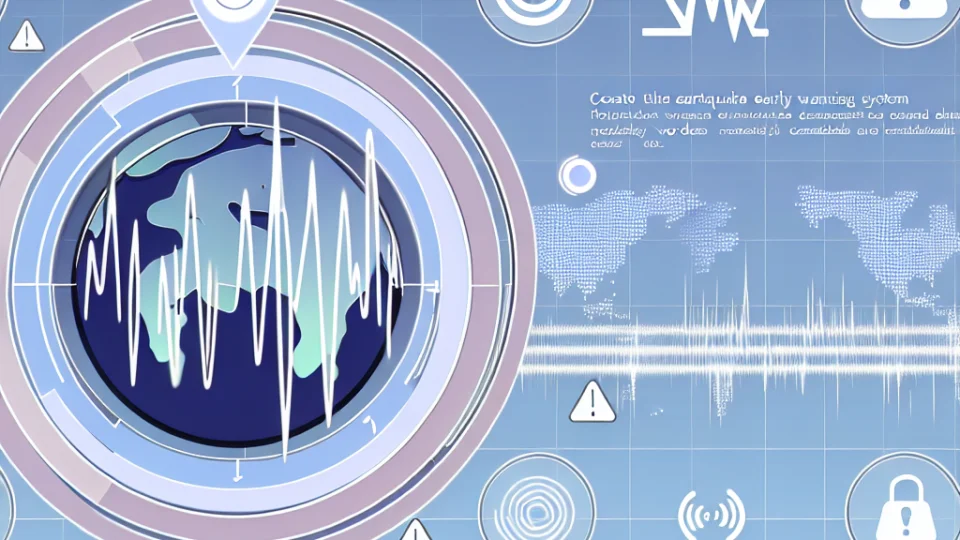
Earthquake early warning systems are designed to provide information to people and infrastructure before the effects of an earthquake are felt, utilizing the speed of seismic waves. These systems use various sensors and detectors to detect underground seismic movements. First, the P waves, which spread from the earthquake's epicenter, move faster than the S waves. This characteristic provides a critical advantage for early warning systems to detect earthquakes and transmit information.
The system starts with a series of seismometers that monitor underground seismic activities. These seismometers detect the initial tremors that occur at the moment of an earthquake and analyze the data based on these readings. If the seismometers detect a tremor of a certain magnitude, the system immediately begins to issue warnings. This alert is typically communicated to people and critical infrastructure within a few seconds, allowing necessary precautions to be taken.
Warning systems generally operate through mobile applications, messaging systems, and local radio stations. This allows for different channels to be used to reach people during an earthquake. For example, at the moment an earthquake occurs in a city, the system can immediately send notifications to mobile phones, enabling people to move to a safe location. Such measures are quite effective in reducing loss of life.
In conclusion, earthquake early warning systems work by rapidly analyzing seismic data and transmitting this information to people. The effectiveness of these systems depends on the quality of the technology and infrastructure used. Many places around the world are developing and utilizing such systems. The widespread adoption of these systems has the potential to enhance earthquake safety and save lives.
Which Countries Use Earthquake Early Warning Systems?

Many countries around the world use earthquake early warning systems to inform their citizens about potential earthquakes. These systems aim to provide people with valuable time by monitoring seismic activities in real-time before an earthquake occurs. Japan, in particular, has one of the most advanced systems globally, analyzing the speed of seismic waves to give people critical time to move to a safe location. Japan's success with this system plays a significant role in reducing casualties after an earthquake.
The United States is another country that actively uses earthquake early warning systems. California is the region where this system is most intensively implemented, sending alerts to its citizens through a system called 'ShakeAlert.' This system analyzes parameters such as the magnitude and depth of an earthquake to provide information to people before they feel its effects. Additionally, this system allows for automatic measures, such as shutting down transportation, energy, and water facilities.
Mexico is another country with a high earthquake risk, and therefore, it is among the countries that have established early warning systems. Mexico's 'SASMEX' (Mexican Seismic Alert System) sends alerts by calculating the distance between the earthquake's epicenter and the user's location. The fact that this system informs people just a few seconds before an earthquake occurs has a significant impact on reducing losses. Through this system, Mexico aims to protect not only its citizens but also public services.
Among other countries, Turkey is also taking steps to develop earthquake early warning systems. Various universities and public institutions in Turkey are working on systems to provide information to citizens during and before an earthquake by analyzing seismic data. Especially in large cities like Istanbul, where the earthquake risk is high, the development and widespread implementation of such systems are extremely important. Turkey's efforts in this field aim to create a safer living environment in the future.
What Are the Benefits of Earthquake Early Warning Systems?
Earthquake early warning systems are technologies developed to minimize loss of life and property during an earthquake. These systems provide critical information seconds before an earthquake occurs, helping to protect people and infrastructure. This way, individuals can learn about the impending earthquake, move to a safe location, and take necessary precautions. The greatest advantage of such systems is that they give time to prepare before an earthquake.
Early warning systems are crucial not only for individuals but also for public services and emergency management. The system quickly relays information to emergency teams by determining the magnitude and location of the earthquake. As a result, emergency response teams can reach the incident sites faster and make timely interventions. This situation generally ensures that society is better prepared for disasters.
Additionally, earthquake early warning systems contribute to reducing economic losses. Earthquakes lead not only to loss of life but also to significant material damages. However, thanks to early warning systems, individuals and businesses can be less affected by the impacts of an earthquake. This way, business continuity and economic stability are maintained. Moreover, these systems can help alleviate the psychological effects on people after an earthquake.
Finally, one of the most important benefits of early warning systems is raising awareness about earthquakes in society. These systems ensure that people are aware of the earthquake risk and are educated about it. Educational programs and awareness campaigns strengthen social solidarity by teaching the correct steps to take before and after an earthquake. Thus, individuals not only look out for their own safety but also for the overall safety of the community.
What Should We Do During an Earthquake?
Knowing what to do during an earthquake is crucial for your survival. First and foremost, when you feel the earthquake starting, you should not panic. Staying calm helps you assess the situation and make the right decisions. If you are indoors, you should immediately move to a safe place. These safe spots are usually under a table or in doorways.
If you are outside, you should head to an open area. Staying away from buildings, trees, and power lines is the best approach for ducking and taking cover. When you are outside, lying down and protecting your head can be beneficial. In this situation, you should be careful to observe the dangers around you and protect yourself. Additionally, if you are in your vehicle, you should slow down and pull over to a safe spot. When you park your vehicle, do not forget to engage your brakes firmly.
Moreover, it is important to take necessary precautions based on your situation after the earthquake. After the quake, you may encounter additional hazards such as fire or gas leaks. Therefore, you should consider turning off gas valves and cutting off the electricity at home or work. Additionally, providing first aid to injured individuals can be life-saving. Depending on the severity of the situation, it may also be necessary to seek medical assistance.
Finally, it is important to communicate after the earthquake. By contacting your family members or friends, let them know that you are safe. When using mobile phones, keep in mind that lines may be busy. Therefore, you should prioritize communication for emergencies. During and after an earthquake, such practical information will increase your chances of survival.
What is the Technological Infrastructure of Earthquake Early Warning Systems?
Earthquake early warning systems consist of a series of technological components such as seismic sensors and communication infrastructures. These systems detect underground movements and send instant alerts to people and infrastructure based on the distance from the earthquake's epicenter. As soon as the sensors detect the occurrence of an earthquake, they transmit the data to a central server. This server analyzes the data and provides information about the magnitude and location of the earthquake. This rapid data processing allows people to gain time to escape to a safe place.
One of the most important components of earthquake early warning systems is data transmission technologies. These systems enable the rapid analysis of data coming from sensors and its delivery to users. Typically, fiber optic cables, radio waves, and internet connections are used. These connections make it possible to deliver data within seconds. Thus, necessary precautions can be taken in a timely manner to minimize the effects of the earthquake. Additionally, these systems inform the public through mobile applications and SMS services.
Another important technology is artificial intelligence and machine learning algorithms. These algorithms help predict future possible seismic activities by analyzing earthquake data. Artificial intelligence can determine which conditions in specific regions may lead to earthquakes by examining past earthquake data. This enables the development of a more effective early warning system. Furthermore, such systems continuously update themselves to achieve more accurate results.
Lastly, application and software development is also a part of earthquake early warning systems. These software applications allow users to receive real-time information about the earthquake situation. Mobile applications help users become aware of the earthquake risk in their location. Additionally, these applications provide informative content about what to do during earthquakes. Software development should be continuously updated to enhance the system's efficiency.
What Are the Best Earthquake Early Warning Systems in the World?
There are many earthquake early warning systems successfully implemented around the world. These systems provide a significant time advantage to people and infrastructure by collecting real-time data during an earthquake. For example, Japan's ShakeAlert system quickly detects underground seismic movements, calculates the distance to the earthquake's epicenter, and shares this information with users within seconds. This allows people to find a safe place to take shelter during an earthquake.
Mexico's Mexican Seismic Alert System (SASMEX) is another system recognized worldwide. This system collects seismic data to predict the arrival time of earthquake waves. Depending on the magnitude and depth of the earthquake, the alerts provided by the system may vary. Thanks to this system, Mexico has managed to save the lives of thousands of people, especially in large cities. The effectiveness of such systems is further enhanced by raising public awareness about earthquakes.
Systems like ShakeAlert and Caltech used in the United States play a crucial role in high-risk areas like California. These systems are supported by sensors operating through a network that monitors ground movements. These sensors detect the magnitude and depth of the earthquake, sending instant alerts. Additionally, these systems automatically disable critical infrastructures such as trains, energy, and water, minimizing potential damage.
Italy's Early Warning System is one of the most effective systems implemented in Europe. This system analyzes the local effects of earthquakes, providing critical information especially for large cities. Due to its historical structures and dense population, Italy has made significant investments in earthquake early warning systems. The greatest advantage of this system is informing the local population about what to do during an earthquake. This aims to create a culture of safety within the community.
How Will Earthquake Early Warning Systems Evolve in the Future?
The development of earthquake early warning systems in the future will accelerate further with technological advancements and the evolution of data analysis techniques. The integration of innovative methods such as artificial intelligence and machine learning will enable these systems to respond more accurately and quickly. In particular, by using more advanced algorithms for detecting seismic waves, the epicenter and magnitude of earthquakes can be predicted more accurately. Additionally, the user-friendly interfaces of these systems will play a significant role in informing the public.
Moreover, global collaborations and data sharing have the potential to enhance the effectiveness of earthquake early warning systems. Countries can create a broader monitoring network worldwide by sharing the data obtained from their own systems. Such collaborations will aid in better understanding and predicting earthquake activities in different regions. Therefore, promoting data exchange between countries is crucial for the success of these systems.
Furthermore, the widespread adoption of mobile technologies and smart devices will make earthquake early warning systems more accessible on a personal level. Users will receive real-time alerts through their smartphones, allowing them to be informed of earthquakes more quickly. Applications will provide users with information on what to do during an event, enhancing their safety. This situation will increase preparedness rates at both individual and societal levels.
Finally, it is expected that earthquake early warning systems will be integrated with integrated systems in the future. These systems, integrated with smart city applications, transportation systems, and emergency management, will offer more comprehensive solutions by utilizing real-time data. Such integrations will ensure that rapid intervention and rescue efforts during an earthquake are more effective. Thus, not only the warning but also the capacity to take action will increase.